
Key Takeaway
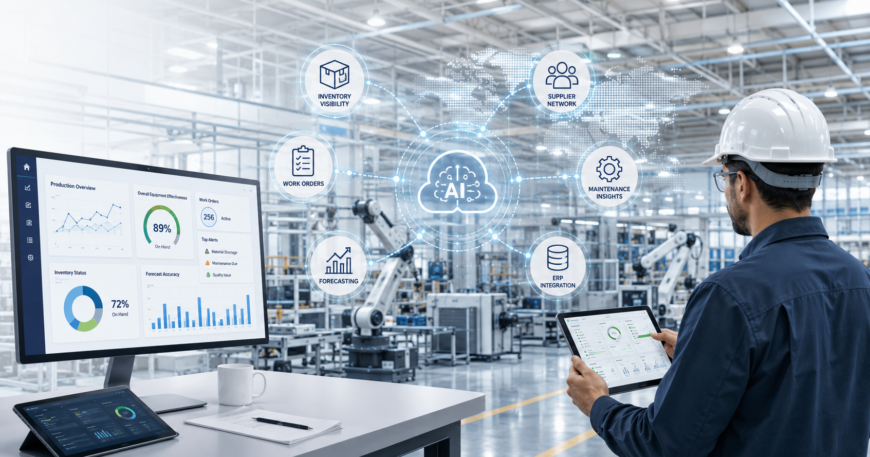
Factory shutdowns are most often triggered by three critical factors: material shortages, equipment failures, and workforce constraints. While these issues appear unrelated, they frequently stem from the same underlying problem—fragmented operational data spread across forecasts, BOMs, inventory records, supplier communications, maintenance logs, work orders, quality systems, and ERP platforms.
Why Do Manufacturing Facilities Experience Unexpected Shutdowns?
Despite investments in ERP, MES, automation technologies, and Industry 4.0 initiatives, production interruptions continue to occur. In most cases, the root cause can be traced to material shortages, workforce constraints, and equipment failures. Critical information remains scattered across systems, spreadsheets, emails, supplier portals, and planning tools, forcing teams to spend valuable time searching for information instead of acting on it.
Production moves at machine speed. Decision-making often moves at human speed. The gap between the two creates risk.
How Can AI Prevent Production Shutdowns Caused by Material Shortages?
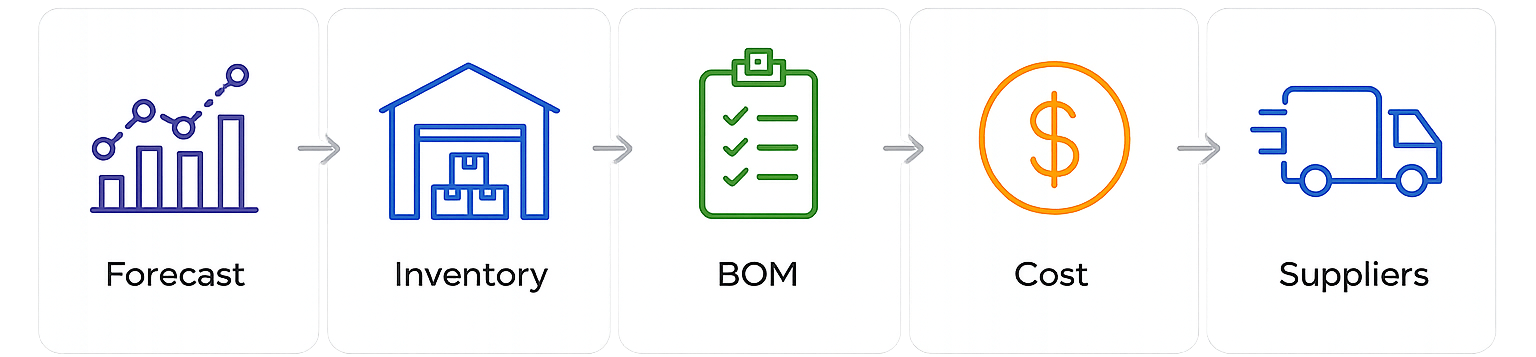
Material shortages remain one of the most common causes of manufacturing downtime. Procurement teams require visibility into inventory levels, Bills of Materials, demand forecasts, supplier performance, purchase orders, and alternate sourcing options.
How Can AI Reduce Production Risks Caused by Workforce Constraints?
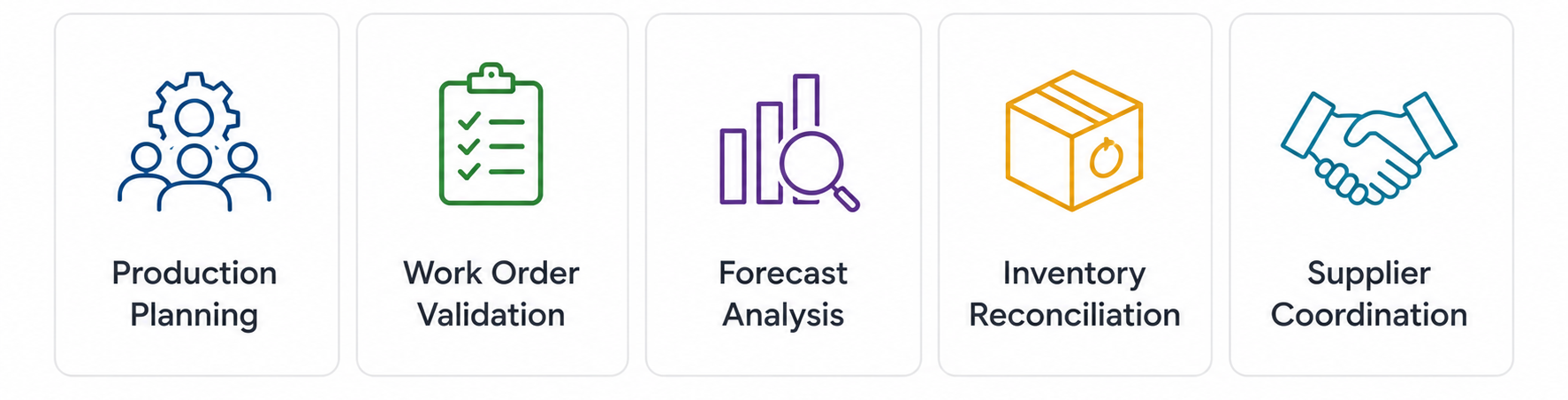
Manufacturers frequently face labor shortages during periods of increased demand. At the same time, many planning, coordination, and validation activities depend heavily on a limited number of experienced personnel.
How Can AI Prevent Equipment-Related Shutdowns?
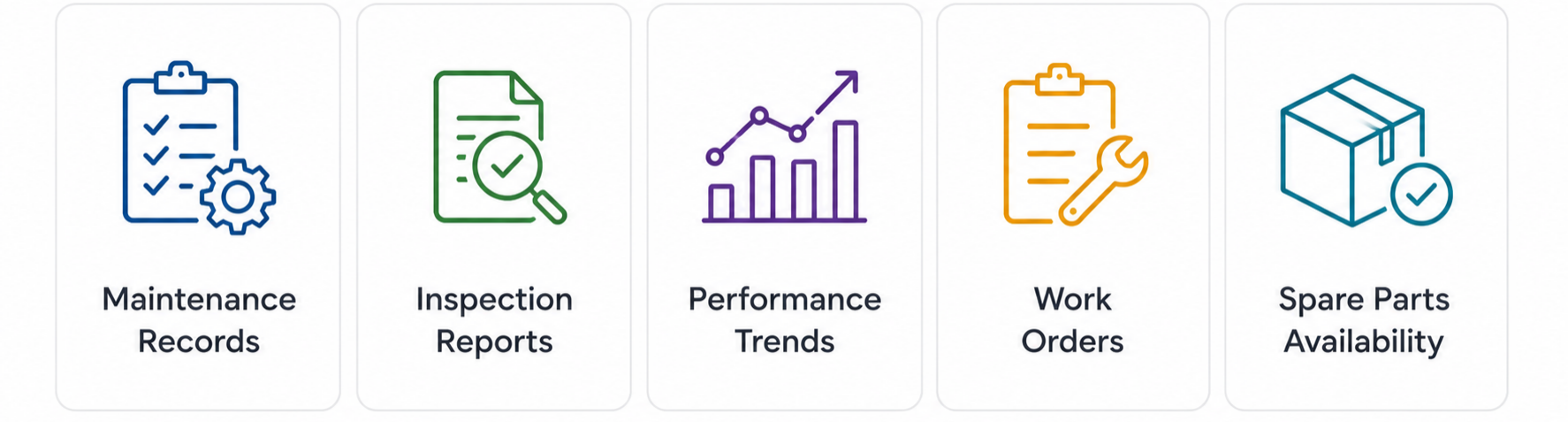
Production equipment rarely fails without warning. Maintenance records, inspection reports, spare-parts inventories, and performance trends often provide early indicators of failure.
How Does DocuVera360 Power AI-Driven Manufacturing Automation?
Once risks are identified, the platform automatically validates information, applies business rules, prioritizes issues using risk-based scoring, generates alerts, recommends corrective actions, and initiates downstream workflows.
How Does DocuVera360 Detect and Prevent Production Risks?
Potential inventory shortages, supplier delays, forecast variances, quality deviations, maintenance risks, and production bottlenecks are surfaced early. Detected issues are prioritized using risk-based scoring, enabling teams to focus on disruptions most likely to impact production continuity, operational efficiency, and customer commitments.
This transforms manufacturing operations from reactive firefighting to predictive and proactive decision-making.
How Does DocuVera360 Enable Predictive Manufacturing Operations?
• Continuous Signal Monitoring – Monitors inventory, suppliers, forecasts, production schedules, maintenance records, and workflows to identify early indicators of disruption.
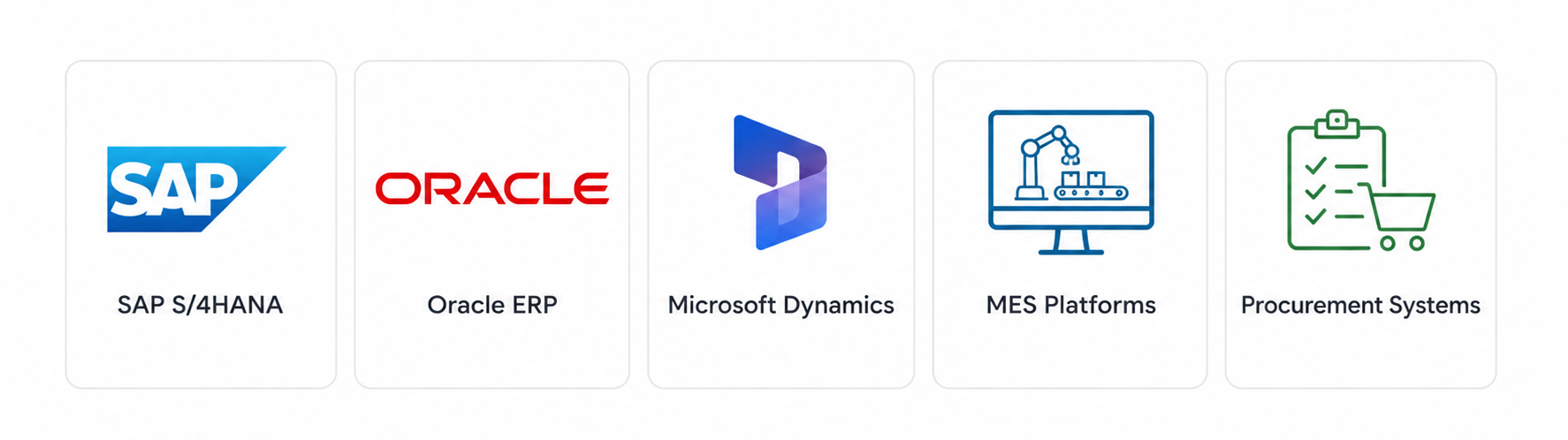
• Cross-System Intelligence – Correlates data across ERP, procurement, production, maintenance, and quality systems.
• Risk Scoring – Prioritizes shortages, delays, bottlenecks, and equipment-related issues.
• Early-Warning Alerts – Notifies teams before disruptions impact production.
• Exception Management – Identifies deviations and escalates issues automatically.
• Recommended Corrective Actions – Suggests actions such as expediting orders, reallocating inventory, adjusting schedules, or initiating preventive maintenance.
• Automated Workflow Initiation – Triggers tasks, approvals, and escalation workflows automatically.
The Hidden Cost of Slow Operational Data
Manufacturers often measure downtime in lost production hours, but the true cost begins much earlier. Suppliers, inventory, replacement parts, or corrective actions may already be available—the challenge is identifying and acting on the information quickly enough.
AI-driven manufacturing automation ensures operational decisions happen at the same speed as production. By enabling earlier intervention, faster decision-making, and proactive risk management, manufacturers can reduce unplanned downtime, improve schedule adherence, increase operational efficiency, and strengthen customer delivery performance.
Production disruptions rarely occur without warning. The challenge is identifying the signals early enough to act. Discover how DocuVera360 helps manufacturers predict shortages, prevent downtime, and maintain production continuity through AI-driven operational intelligence.
Schedule a personalized demonstration to see DocuVera360 in action.