
DocuVera360 transforms procurement data into actionable spend intelligence, helping organizations uncover savings opportunities, reduce sourcing risk, and strengthen strategic sourcing decisions.
Key Takeaway
Manufacturers generate vast amounts of procurement data every day, yet many sourcing decisions are still made with limited visibility into pricing inconsistencies, supplier performance, and contract compliance. AI-powered spend analysis bridges this gap by transforming procurement and transaction data into actionable procurement intelligence. Platforms like DocuVera360 enable procurement teams to uncover hidden savings opportunities, optimize supplier portfolios, and make more strategic sourcing decisions that directly impact profitability. Learn how the DocuVera360 procurement intelligence platform converts fragmented procurement data into actionable procurement intelligence for manufacturers.
The Procurement Blindspot Costing Manufacturers Millions
Most manufacturers have spent years optimizing production efficiency, reducing waste, and improving operational performance. Yet one of the largest drivers of profitability often remains under-optimized: procurement. Despite representing a significant share of operational expenditure, procurement teams frequently lack complete visibility into how money is being spent, which suppliers deliver the greatest value, and where pricing inconsistencies, contract leakage, and sourcing inefficiencies quietly erode margins.
The issue is not a lack of information. Procurement organizations generate enormous volumes of data through purchase orders, RFQs, supplier quotations, contracts, invoices, quality reports, and supplier communications. Unfortunately, this information is often scattered across ERP systems, email inboxes, spreadsheets, and document repositories.
Without answers to critical questions around pricing consistency, supplier value, purchasing leverage, and sourcing risk, procurement becomes transactional rather than strategic. This challenge is widely recognized across the procurement profession, with the Institute for Supply Management’s 2024 Strategic Sourcing White Paper highlighting the importance of strategic sourcing, spend visibility, supplier performance, and risk management. This creates a procurement blind spot where cost leakage and supplier risks remain hidden until they begin impacting margins.
What Are the Three Biggest Sources of Procurement Margin Leakage?
- Inconsistent Component Pricing– Identical components are often purchased at different prices across plants, departments, or business units, limiting purchasing leverage and increasing overall procurement costs.
- Hidden Supplier Performance Costs – Supplier performance extends far beyond price. Late deliveries, recurring quality issues, compliance failures, and inconsistent service levels can lead to production delays, expediting costs, excess inventory, and unplanned downtime, increasing the true cost of procurement.
- Procurement Intelligence Trapped Across Systems and Data – Critical sourcing insights remain buried across purchase orders, supplier quotations, contracts, invoices, quality records, certifications, and supplier communications. Without connecting this information, procurement teams struggle to identify pricing anomalies, supplier risks, contract non-compliance, and opportunities for strategic sourcing.
Why Traditional Spend Analysis Falls Short
Most spend analysis initiatives rely heavily on ERP transactions and structured purchasing records.
While these systems can reveal how much was spent and where spending occurred, they often overlook the procurement intelligence hidden within supplier quotations, contracts, invoices, quality certifications, delivery records, and supplier communications.
This broader approach to procurement intelligence is increasingly recognized as a best practice by the Chartered Institute of Procurement & Supply (CIPS) Supplier Relationship Management (SRM) guidance, which emphasizes using comprehensive supplier and procurement data to support better sourcing decisions.
For example, an ERP system may show that a component was purchased from three suppliers. What it cannot easily reveal is:
- Which supplier consistently delivers late
- Which supplier has the highest defect rate
- Which supplier is violating contracted pricing
- Which supplier offers the best total value
As a result, procurement teams often have spend visibility but lack sourcing intelligence. Modern procurement requires more than historical reporting. It requires the ability to transform procurement information into sourcing decisions.
The Procurement Intelligence Gap
Most procurement technologies are designed to record transactions. ERP systems capture purchase orders; supplier portals manage vendor interactions, and contract repositories of store agreements. While these systems generate valuable procurement data, they rarely connect information across the procurement lifecycle to deliver actionable sourcing intelligence.
This missing intelligence layer is what transforms fragmented procurement information into confident sourcing decisions.
At Trellissoft, we refer to this challenge as the Procurement Intelligence Gap—the space between procurement data and procurement action.
Procurement leaders need answers to questions such as:
- Which suppliers are charging different prices for identical components?
- Which suppliers consistently underperform?
- Which contracts are being violated?
- Which categories present supplier consolidation opportunities?
Answering these questions manually can take weeks. AI makes intelligence immediately available.
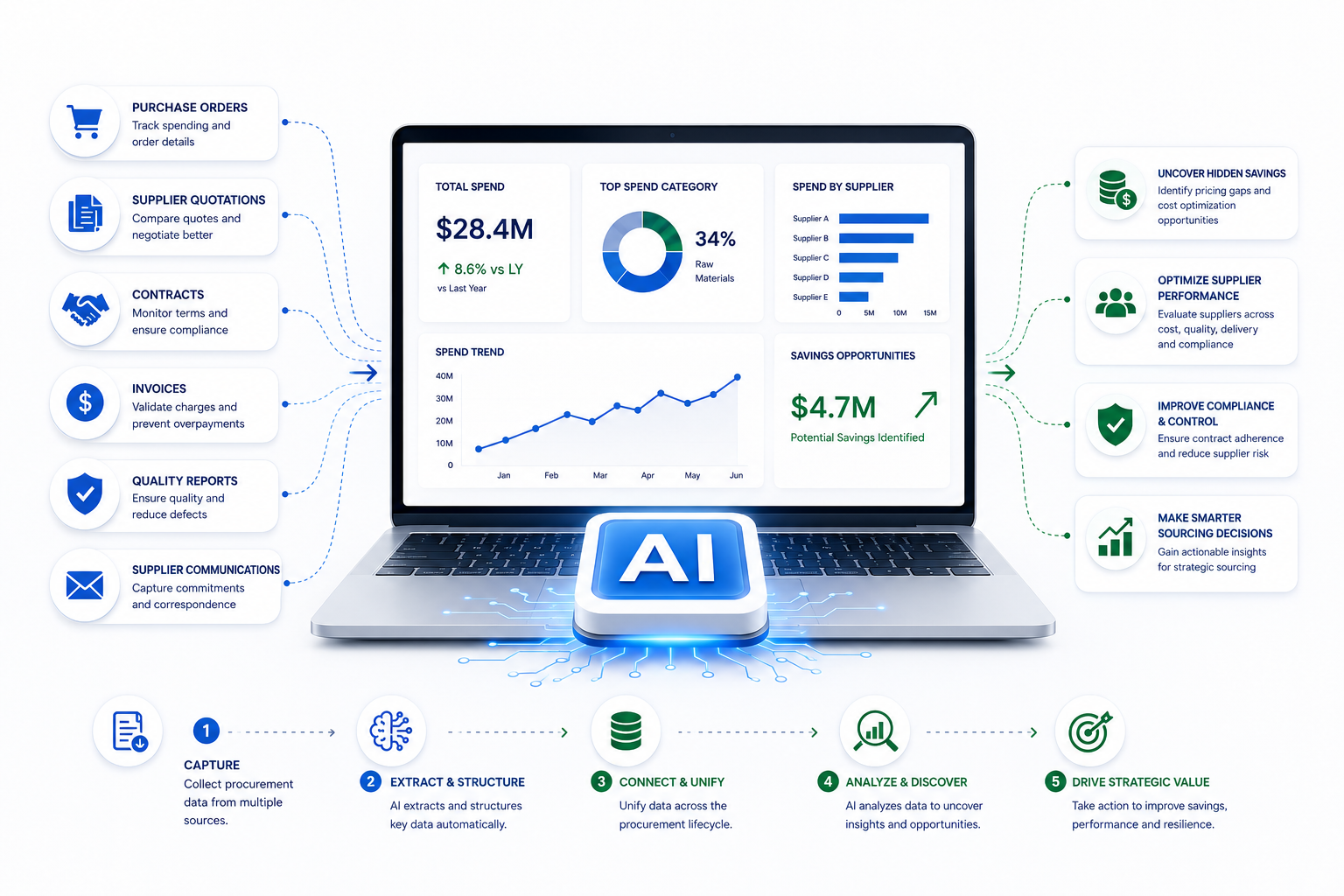
How DocuVera360 transforms fragmented procurement data into AI-powered procurement intelligence for smarter sourcing decisions.
How DocuVera360 Turns procurement data into Strategic Sourcing Intelligence
DocuVera360 serves as the intelligence foundation for procurement operations. The platform ingests procurement data from ERP systems, purchase orders, RFQs, supplier quotations, contracts, invoices, quality systems, delivery records, and supplier communications.
Discover how DocuVera360 automates extraction from invoices, contracts, RFQs, purchase orders, and supplier documents.
Using AI-powered data extraction and contextual intelligence, DocuVera360 extracts supplier information, pricing details, contract terms, delivery commitments, and quality metrics. It then connects related information across the procurement lifecycle, creating a unified procurement intelligence layer.
Once procurement information is connected, DocuVera360 can automatically identify:
- Different prices being paid for identical components
- Suppliers with declining delivery performance
- Contract pricing violations
- Supplier concentration risks
- Opportunities for supplier consolidation
- Categories requiring renegotiation
Beyond identifying existing procurement issues, DocuVera360 continuously connects and analyzes procurement information across the sourcing lifecycle to surface emerging supplier risks, pricing trends, and contract compliance issues. This enables procurement teams to move beyond reactive spend reporting, supporting earlier intervention, more informed supplier evaluations, and proactive strategic sourcing decisions.
Procurement teams gain immediate visibility into sourcing opportunities that would otherwise remain hidden across thousands of procurement documents and transactions. This enables sourcing teams to prioritize negotiations, supplier consolidation initiatives, and cost-reduction opportunities based on measurable procurement intelligence.
How DocuVera360 Improves Strategic Sourcing Decisions
Traditional spend analysis tells procurement leaders where money has already been spent.
Strategic sourcing determines where money should be spent next.
By continuously evaluating supplier performance, contract compliance, component-level pricing trends, and sourcing risk, DocuVera360 enables procurement teams to make better-informed sourcing decisions.
The platform analyzes suppliers across cost competitiveness, delivery reliability, product quality, compliance performance, and supplier risk—helping organizations identify consolidation opportunities, strengthen negotiation leverage, reduce supplier dependency, and optimize sourcing strategies.
The result is a shift from reactive procurement to proactive strategic sourcing.
Consider a manufacturer sourcing the same industrial fasteners across multiple plants. While ERP reports show overall spend by supplier, they may not reveal that identical components are being purchased at different prices, that one supplier consistently misses delivery commitments, or that another has a higher rate of quality issues.
By connecting procurement documents, supplier quotations, contracts, invoices, and quality records, DocuVera360 brings these insights together in a single intelligence layer. Procurement teams can quickly identify pricing inconsistencies, evaluate supplier performance, consolidate sourcing where appropriate, and prioritize negotiations based on complete procurement intelligence rather than fragmented data.
Organizations that combine AI-powered spend analysis with procurement intelligence are better positioned to reduce procurement costs, strengthen supplier performance, improve contract compliance, and accelerate strategic sourcing decisions. By transforming fragmented procurement information into connected, actionable intelligence, procurement teams can negotiate with greater confidence, mitigate supplier risk earlier, improve operational resilience, and continuously identify new opportunities for cost optimization.
These outcomes align with McKinsey’s research on digital procurement, which highlights how advanced analytics, automation, and AI can improve sourcing performance, operational efficiency, and long-term value creation. See how manufacturers are using DocuVera360 across procurement, finance, and supply chain operations.
Conclusion
As supply chains become more complex and sourcing decisions increasingly influence business performance, manufacturers can no longer rely on fragmented procurement information and periodic spend reviews. Procurement has evolved beyond a transactional function to become a strategic driver of profitability, operational resilience, and competitive advantage.
By transforming fragmented procurement information into actionable intelligence, DocuVera360 helps manufacturers eliminate procurement blind spots, uncover hidden savings opportunities, strengthen supplier performance, and make more confident strategic sourcing decisions.
Ready to Eliminate Procurement Blind Spots?
Discover how DocuVera360 transforms fragmented procurement data into actionable sourcing intelligence.