
What is Dead Air in Contact Centers?
Dead air refers to unexpected, prolonged silences over 5 seconds during customer interactions in a contact center. These gaps often occur when agents search for information, struggle to follow scripts, or face system delays. While a few seconds may seem minor, dead air creates frustration, lost engagement, and lower customer satisfaction (CSAT) scores.
For high-volume contact centers, reducing dead air is not just about improving call flow—it is about operational efficiency, compliance, and revenue impact.
Beyond Voice: Dead Air Across Digital Channels
While voice interactions highlight dead air most prominently, today’s omnichannel contact centers face similar challenges across digital touchpoints:
- Live Chat Delays: Even 30-second response gaps can cause 70% of customers to abandon chats, similar to call hang-ups.
- Email Response Timing: “Dead air” expands from seconds to hours, with customer expectations for first responses now averaging under 4 hours.
- Social Media Engagement: Platforms where public conversations occur amplify the impact of slow responses, with 60% of customers expecting responses within an hour.
- Chatbot-to-Agent Transitions: Handoffs between automated systems and human agents create unique “dead zones” where context can be lost, and customers must repeat information.
Without AI-driven automation, these response delays lead to lower customer satisfaction, lost sales opportunities, and increased churn.
The Hidden Costs of Dead Air
- Longer Average Handle Time (AHT): Every unnecessary pause increases call duration and operational costs.
- Lower First-Call Resolution (FCR): Customers may lose confidence in agents, leading to repeat calls.
- Compliance Risks: In regulated industries, hesitation in script adherence (e.g., Mini Miranda disclosures) raises legal exposure.
- Lost Sales & Upsell Opportunities: Silence disrupts customer engagement, reducing conversion rates.
Legacy QA misses the mark. Manual QA teams can only review a small percentage of calls, leaving significant blind spots in dead air analysis.
How AI Eliminates Dead Air & Transforms Contact Centers
Real-Time Agent Coaching & Assistance
AI-Generated Call Summaries
Automated Call Quality Assurance (Auto QA)
Conversational Intelligence for CX Optimization
Speech Analytics for Compliance & Risk Mitigation
How PulseAI360 Helps Contact Centers Reduce Dead Air
PulseAI360 is an AI-powered contact center solution that eliminates dead air by automating call quality assurance, providing real-time coaching, and delivering actionable insights. With PulseAI360, contact centers can:
- Monitor 100% of calls instead of relying on random sampling.
- Identify and eliminate dead air patterns through AI-driven speech analytics.
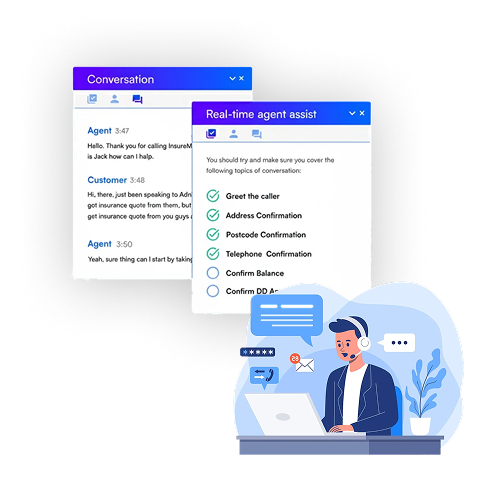
- Provide real-time guidance to agents, improving engagement and efficiency.
- Automate compliance monitoring, reducing the risk of missed disclosures.
- Optimize call flow and customer interactions, leading to higher CSAT and revenue opportunities.
By leveraging AI to streamline operations, PulseAI360 helps contact centers enhance service quality, reduce operational costs, and drive better customer outcomes.
The Next Frontier: How AI is Redefining Contact Center Efficiency
Contact center AI is evolving rapidly, with several emerging capabilities set to transform how organizations eliminate dead air:
- Predictive Engagement: AI will anticipate customer questions before they are asked, eliminating hesitation entirely.
- Emotion-Adaptive Responses: AI will detect customer emotional states and guide agents to adjust pacing and response styles accordingly.
- Hyper automation: The integration of RPA, AI, and workflow automation will create seamless backend processes that eliminate system-related delays.
- Agent-AI Collaboration: AI will evolve into a true conversational partner, working alongside agents to optimize real-time decision-making.
- Personalized Silence Thresholds: AI will learn individual customer preferences for conversation pacing, recognizing that optimal timing varies by customer segment and interaction type.
For forward-thinking contact centers, implementing PulseAI360 today lays the foundation for these advanced capabilities, ensuring your customer experience stays ahead of competitors as AI technology continues to evolve.
The Measurable Impact of AI in Reducing Dead Air
Reducing dead air is not just about improving conversation flow—it has direct, measurable benefits for operational efficiency, agent performance, and customer experience. AI-powered automation enables real-time intervention, optimizing workflows, and ensuring compliance, all while enhancing overall service quality.
Contact centers that leverage AI to eliminate dead air are seeing significant improvements across key performance metrics:
- 20-30% reduction in Average Handle Time (AHT) by optimizing agent workflows.
- Higher CSAT & NPS scores from seamless, real-time agent interactions.
- Lower agent attrition as AI removes repetitive, high-friction tasks.
- 50% improvement in script adherence through automated compliance monitoring.
AI-Powered Contact Centers: The Next Competitive Advantage
For contact centers in telecom, healthcare, BPOs, and financial services, reducing dead air is no longer optional—it is a strategic advantage. AI-driven automation helps teams eliminate inefficiencies, drive agent performance, and deliver seamless customer interactions at scale.
Want to see how PulseAI360 can help your contact center eliminate dead air and improve customer experience?