A CASE STUDY
TRANSFORMING CARE WITH A SECURE MOBILE APP
Unified Healthcare Intelligence and Enterprise Data Integration
Industry
Healthcare
Domain
Data Engineering & Analytics
Executive Summary
For value-based physician networks, disjointed EMR instances and non-secure communication channels historically created severe visibility gaps and HIPAA compliance vulnerabilities. This lack of a single source of truth caused critical blind spots during patient transitions, elevating clinical risk and forcing manual heroics to bridge operational divides.
To resolve these gaps, we engineered a secure mobile platform natively integrated with the enterprise data infrastructure. By consolidating fragmented workflows into a unified ecosystem, the solution reclaimed thousands of administrative hours and transitioned the network into an optimized, proactive care delivery engine.
1,000s
Of administrative hours reclaimed from manual workflows
100%
HIPAA-compliant, encrypted mobile communication
1
Single source of truth via Enterprise Data Warehouse
Client Overview
The client operates as a prominent value-based physician network focused on delivering high-quality, coordinated patient care. Operating across multiple facilities, their clinical teams require seamless access to patient data, rapid transitional care alerts, and strictly compliant communication channels to effectively execute complex care pathways.
Core Competencies
Value-Based Care
Patient Transitions
Clinical Coordination
Patient Follow-ups
Tech Environment
Diverse EMRs
Secure Mobile Apps
Data Warehouse
Microsoft Power BI
The Challenge: Data Fragmentation and Manual Heroics
The core obstacle obstructing value-based care delivery was systemic data fragmentation. The lack of a single source of truth meant that care managers were constantly verifying outdated information rather than acting on real-time clinical intelligence.
"With 160+ applications, traditional one-by-one migration methods would be time-consuming, inconsistent, and expensive. The client needed a repeatable factory-based modernization model to handle the diverse application portfolio."
Key Friction Points
Siloed System Operations
Physicians navigated multiple, non-integrated EMR and web systems simultaneously, creating high operational friction and severely restricting immediate care plan access during critical patient interventions.
Unsecure Communication Practices
The total absence of integrated mobile messaging forced providers to utilize unauthorized third-party consumer applications, significantly elevating enterprise HIPAA exposure risk and data governance liabilities.
Transitional Care Blind Spots
Disconnected platforms prevented real-time alert visibility, causing systemic delays in Transitional Care Management (TOC) outreach, patient follow-ups, and group-based clinical coordination.
Absence of an Analytical Foundation
Without a unified repository for workflow data, executive management lacked the capacity to measure communication performance, audit system access, or optimize patient care pathways.
The Solution: Architecting a Single Source of Truth
To eliminate these operational bottlenecks and compliance risks, our team engineered a comprehensive mobile application and enterprise data architecture designed to serve as an uncompromising single source of truth for all provider collaboration.
Implementation Highlights
1
Secure Hybrid Mobile Framework
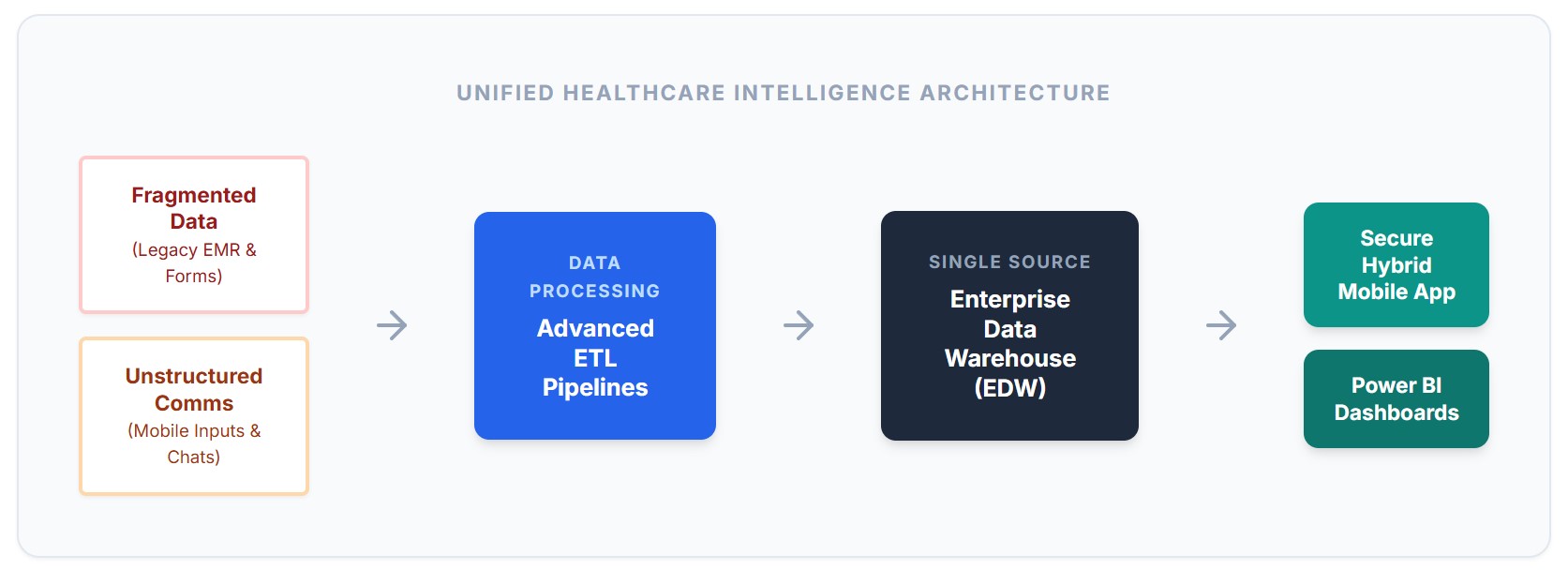
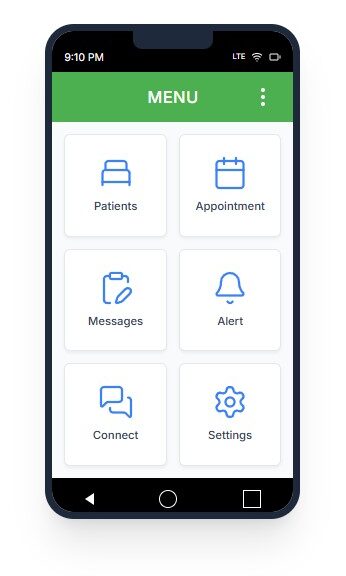
The frontend utilized a highly responsive hybrid mobile framework (Android and iOS) secured by biometric authentication, token-based API models, and an encrypted REST backend entirely replacing non-compliant third-party APIs.
2
Advanced ETL Data Pipelines
To achieve deep systemic integration, we deployed advanced ETL pipelines. These pipelines continuously synced mobile inputs, unstructured clinical messages, and legacy EMR records, transforming them into a standardized format.
3
Enterprise Data Warehouse (EDW)
The refined data fed directly into a newly consolidated EDW. This permanently eliminated legacy data silos and centralized all TOC reporting, clinical care plans, and provider directory networks into one highly secure, unified relational database.
4
Real-Time BI & Interoperability
We integrated interactive Microsoft Power BI dashboards to provide leaders with immediate visibility into metrics, while a custom-built messaging engine facilitated seamless, real-time mobile-to-mobile and mobile-to-web interoperability.
9:10 PM
LTE
📶
🔋
MENU
⋮
Patients
Appointment
Messages
Alert
Connect
Settings
The Results
By optimizing the enterprise data infrastructure and natively integrating secure mobile workflows, the healthcare organization fundamentally accelerated clinical operations, reclaimed wasted administrative hours, and significantly strengthened its regulatory compliance posture.
Reclaimed Administrative Hours
Thousands of hours previously spent on manual data verification and tracking were reallocated back into direct patient care operations.
Strict HIPAA Compliance
The unified platform eliminated the reliance on unsecure third-party applications, fortifying data governance and removing compliance liabilities.
Centralized TOC Outreach
Transitional Care Management is now driven by real-time automated alerts rather than disjointed, manual tracking processes.
Enterprise BI Visibility
Microsoft Power BI integration provides management with instant analytical visibility into task prioritization and performance metrics.
Proactive Care Delivery
With a single source of truth, teams shifted from reacting to outdated clinical intelligence to executing proactive, data-driven interventions.
Optimized Clinical Coordination
Seamless mobile-to-mobile and mobile-to-web messaging eliminated severe workflow friction among cross-functional provider teams.
Operational Metrics Comparison
|
Metric
|
Before Implementation
|
After Implementation
|
|---|---|---|
|
Provider Communication Speed
|
Heavily delayed (hours to days via manual phone calls and emails)
|
Optimized by 35–50% via real-time, unified secure messaging
|
|
Transitional Care Outreach
|
Manual tracking with frequent discharge bottlenecks and fragmented visibility
|
Accelerated by 25% through automated data integration and alerts
|
|
Coordination Delays
|
Systemic communication errors and delayed responses across disconnected teams
|
Reclaimed efficiency with a verifiable 40% reduction in clinical task delays
|
The Outcome Statement
"By consolidating our fragmented clinical workflows into a highly secure single source of truth and engineering a deeply integrated mobile architecture, we fundamentally eliminated the need for manual heroics. This unified data foundation has successfully transitioned our entire physician network from reactive care management to a proactive, highly optimized model of healthcare delivery."