A CASE STUDY
Elevating Population Health Visibility Through a Unified Mobile Patient Application
Industry
Healthcare
Domain
Data Engineering & Analytics
Executive Summary
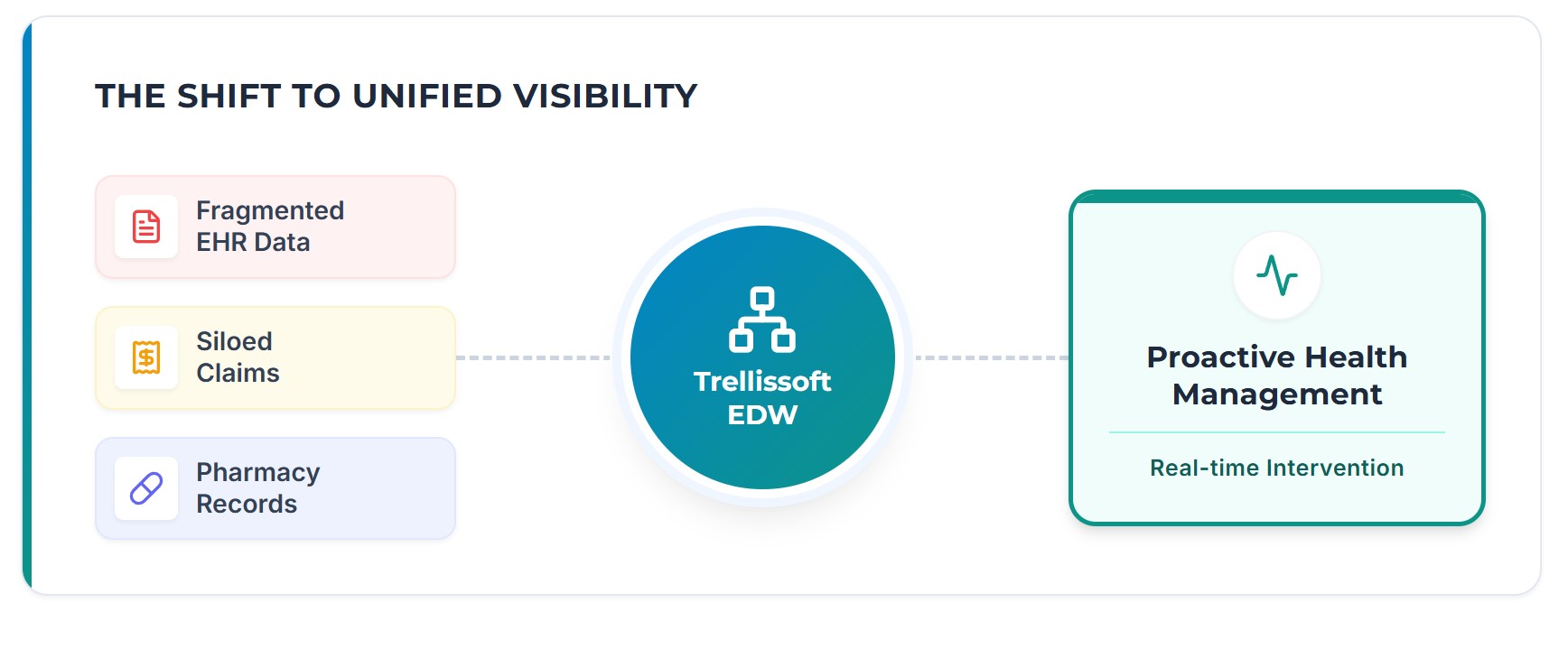
A leading US managed care organization operating in Medicare Advantage programs faced critical visibility gaps across patient engagement, care adherence, and longitudinal health data. Disparate systems, delayed communication loops, and fragmented records limited care teams’ ability to intervene early. As a result, avoidable emergency utilization and missed follow ups persisted despite strong clinical programs.
Trellissoft engineered a unified patient engagement ecosystem anchored by a centralized data architecture and mobile interface. By consolidating patient records into a single source of truth and enabling real time interaction between members and care teams, the organization transitioned from episodic, reactive care delivery to continuous, insight driven management. This shift directly improved adherence, engagement, and utilization metrics while strengthening quality performance indicators.
The Challenge
The organization’s operating model was constrained by fragmented data systems and reliance on manual coordination across care teams.
Key Friction Points
Disconnected patient records across multiple clinical and administrative systems
Limited real time visibility into care plans, medications, and patient status
Heavy dependence on manual outreach and follow up tracking
Delayed symptom reporting due to lack of structured communication channels
Low patient engagement between clinical encounters
Inconsistent adherence to care plans and medication schedules
Elevated avoidable emergency department utilization
Absence of a unified engagement layer for chronic disease management
These constraints created an environment where care delivery relied on reactive interventions and manual heroics rather than structured, data driven workflows.
The Solution
Trellissoft designed and deployed an integrated digital health platform centered on a mobile patient application and a centralized enterprise data foundation.
Core Architecture Components
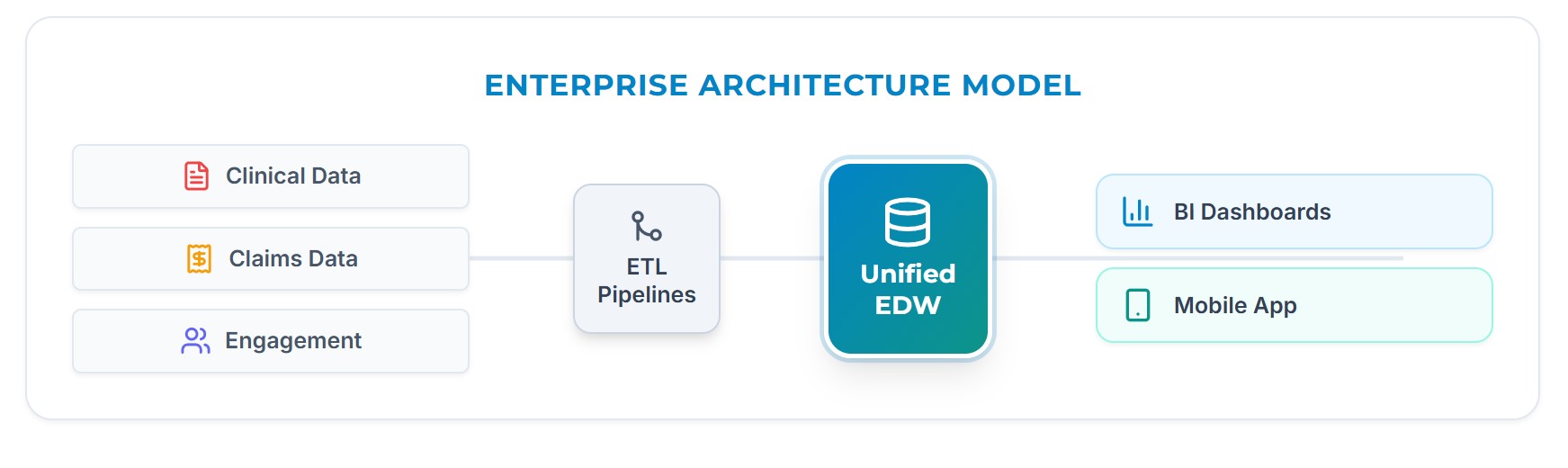
1. Centralized Enterprise Data Warehouse (EDW)
The frontend utilized a highly responsive hybrid mobile framework (Android and iOS) secured by biometric authentication, token-based API models, and an encrypted REST backend entirely replacing non-compliant third-party APIs.
2. ETL Pipelines and Data Orchestration
Robust ETL pipelines were engineered to ingest, transform, and standardize data into the EDW. Event driven processing enabled near real time updates, ensuring care teams and patients accessed current information.
3. Unified Personal Health Record Layer
The platform exposed a consolidated patient record including demographics, care plans, medications, allergies, appointments, and transition of care data. This eliminated duplication and reconciled inconsistencies across systems.
4. Mobile Engagement Application
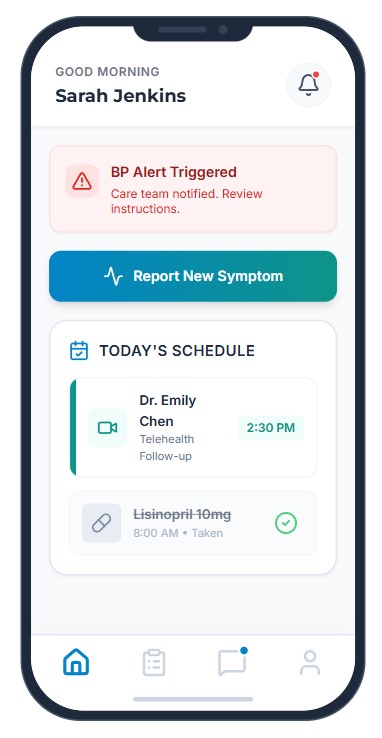
A cross platform mobile application enabled patients to securely access their health information and interact with care teams. Capabilities included:
Secure authentication with token based session control
Appointment visibility and reminders
Medication and adherence tracking
Structured alert submission categorized by urgency
Secure messaging aligned with regulatory standards
Push notifications for proactive engagement
5. Event Driven Alerting and Workflow Integration
A structured alerting framework allowed patients to trigger categorized notifications that were routed in real time to care teams. This reduced latency in symptom escalation and intervention.
6. Business Intelligence Layer
Data from the EDW was surfaced through BI tools such as Power BI and Tableau dashboards, providing operational and clinical teams with actionable insights into engagement, adherence, and utilization trends.
7. Security and Compliance Framework
The platform incorporated encrypted data transmission, role based access controls, audit logging, and compliance aligned authentication protocols to safeguard protected health information.
The Results
|
Metric
|
Before Implementation
|
After Implementation
|
|---|---|---|
|
Patient Engagement
|
Fragmented and episodic
|
Increased by 15 to 25 percent
|
|
Appointment Adherence
|
Inconsistent follow ups
|
Improved by 20 percent
|
|
ED Utilization
|
High avoidable visits
|
Reduced by 10 to 18 percent
|
|
Care Plan Visibility
|
Limited and siloed
|
Fully unified across systems
|
|
Symptom Reporting
|
Delayed and manual
|
Real time structured alerts
|
|
Patient Satisfaction
|
Variable
|
Measurable improvement
|
The Outcome Statement
"By consolidating fragmented health data into a governed single source of truth and embedding real time patient engagement into care workflows, the organization shifted from reactive care coordination to proactive population health management driven by continuous visibility and timely intervention."
This transformation established a scalable digital foundation for value based care, enabling the organization to optimize outcomes, reduce unnecessary utilization, and strengthen its performance across quality and engagement benchmarks.